More Quick Disconnect Manufacturers
Applications of Quick Disconnect Couplings
Quick disconnect couplings, also known as quick connect fittings or quick release couplings, play a crucial role in efficiently and safely handling the transfer of fluids and gases in a wide array of industrial and commercial settings. These components are engineered to provide rapid connection and disconnection of fluid transfer lines—helping to prevent spillage, minimize contamination, and ensure reliable operations. Industries rely on quick disconnects for managing fluids such as air, chemicals, fuel, natural gas, hydraulic oil, water, steam, and even solid particulates in certain applications.
The use cases and industrial applications for quick disconnect couplings are extensive:
- Agriculture: Used in agricultural sprayers and irrigation systems for swift, leak-free hose or nozzle changes, reducing downtime during planting and harvesting cycles.
- Automotive: Essential in fuel systems, brake lines, air conditioning recharging, and pneumatic tool connections, providing technicians with efficiency and safety when servicing vehicles.
- Chemical Processing: Critical in chemical transfer lines, batch processing, and bulk loading/unloading of hazardous fluids, ensuring safe, spill-proof coupling and decoupling operations.
- Food & Beverage: Utilized in sanitary flow lines, beverage dispensers, and washdown systems, where maintaining hygienic, contamination-free connections is paramount.
- Construction: Found in hydraulic power tools, pneumatic equipment, and concrete pumping systems, where quick, tool-free connections increase productivity on job sites.
- Firefighting & Emergency Response: Indispensable for fire hose deployment, decontamination units, and rapid oxygen supply connections—situations where every second counts.
- Aerospace: Aerospace fuel systems and hydraulic lines employ dry disconnect couplings and other specialty fittings to minimize fuel spillage and fire risk while enabling fast maintenance cycles.
- Medical & Laboratory: Used in oxygen and gas supply lines, dialysis equipment, and laboratory instrumentation, where secure, sterile, and reliable fluid or gas connections are vital for patient safety and experimental integrity.
- Industrial Manufacturing: Deployed in coolant lines, air and water supply manifolds, robotics, and tool changers, supporting automation and maximizing uptime.
- Energy & Oil/Gas: Employed for fuel transfer, gas delivery, sampling lines, and offshore drilling equipment, where reliability and environmental safety are critical.
Are you searching for the best quick disconnect couplings for a specific industry? Explore use-case specific solutions and learn more about how quick disconnect fittings can optimize your operations by browsing our detailed guides.

Quick Release Couplings – Nycoil
History of Quick Disconnect Couplings
The evolution of quick disconnect couplings is a story of innovation driven by necessity. The initial designs were developed during World War II to address the military’s urgent requirement for a more practical alternative to traditional pneumatic couplings, which were often cumbersome and required tools for application and removal. These early quick couplings dramatically improved the speed and safety of connecting and disconnecting fuel, hydraulic, and pneumatic lines in combat vehicles and aircraft.
After the war, the advantages of these new couplings—speed, reliability, and tool-free operation—were quickly recognized by commercial industries. As a result, manufacturers began adapting and refining quick disconnect technology for broader industrial, medical, and consumer applications. Today, quick disconnect couplings are ubiquitous, found in everything from garden hoses and beverage dispensers to sophisticated medical and aerospace systems. Their continuous development has included enhancements in materials, sealing technologies, and safety mechanisms to meet the evolving needs of modern industries.
Design of Quick Disconnect Couplings
The design and engineering of quick disconnect couplings are tailored to optimize both performance and compatibility with the fluids or gases being transferred. Manufacturers select materials based on several factors, including chemical resistance, temperature tolerance, pressure demands, and regulatory compliance. Common materials include:
- Stainless Steel: Preferred for high-pressure, high-flow, and corrosive environments such as chemical processing, food and beverage manufacturing, and marine applications.
- Carbon Steel: Selected for rugged industrial uses and hydraulic systems where strength and durability are essential.
- Brass & Nickel-Plated Brass: Valued for their balance of corrosion resistance, machinability, and cost-effectiveness—widely used in plumbing, compressed air, and fuel lines.
- Copper & Bronze: Utilized in specialty applications where thermal conductivity or non-sparking properties are important.
- Aluminum: Lightweight and corrosion-resistant, ideal for portable or aerospace systems.
- Plastic (e.g., Polypropylene, Nylon, PVDF): Increasingly popular for their lower cost, light weight, and superior resistance to many chemicals, making them ideal for laboratory, medical, and food-grade applications.
Key design considerations for quick disconnect couplings include:
- Temperature and Pressure Ratings: Must withstand the operating conditions of the application—ranging from sub-zero environments to high-temperature steam or hydraulic systems with pressures exceeding 5,000 psi.
- Flow Rate and Line Diameter: Couplings are available in sizes from as small as 1/8” to over 10” in diameter, depending on required flow rates and system compatibility.
- Valve Type: Selection of poppet, ball, or sliding seal valves based on desired flow control, spillage prevention, and application demands.
- Connection Mechanism: Includes push-to-connect, threaded, camlock, bayonet, or lever lock designs, each offering unique benefits for speed, safety, or pressure retention.
- Frequency of Use: Some couplings are designed for repeated connection cycles, while others cater to infrequent but critical connections where reliability is essential.
- Safety Features: Wire retainers, locking sleeves, color coding, and interlock mechanisms help prevent accidental disconnection and enhance user safety.
How Quick Disconnect Couplings Work
Quick disconnect couplings are typically designed for intuitive, manual operation—enabling users to connect or disconnect fluid or gas lines swiftly and safely, often using just one hand. This tool-free approach is especially beneficial in environments where speed and minimal downtime are crucial, or where space constraints make tool use impractical.
The connection process usually involves aligning the male and female halves of the coupling and activating an interlocking mechanism—such as pulling back a sleeve, rotating a nut, or pressing a button. When the coupler is engaged, an internal valve (often a poppet or ball mechanism) opens, allowing fluid or gas to flow freely through the line. Upon disconnection, a spring-activated shutoff valve closes immediately, preventing leaks, drips, or contamination. In advanced designs, such as dry disconnect couplings, both halves seal independently to ensure virtually zero fluid loss or exposure, which is vital for hazardous or sensitive applications.
Frequently Asked Questions:
How do I prevent leaks when disconnecting? Use couplings with integrated shutoff valves or dry disconnect technology.
Can I connect and disconnect under pressure? Many modern couplings are engineered for “connect under pressure” conditions—check the product specs for compatibility with your system’s operating pressures.
What’s the difference between manual and automatic quick disconnects? Manual couplings require user engagement, while automatic types may use actuators or sensors in high-tech or automated systems.
Types of Quick-Release Couplings
Quick release couplings come in a wide variety of types and configurations, each optimized for specific applications, media, and performance requirements. Understanding these options helps users select the best quick disconnect fitting for their needs:
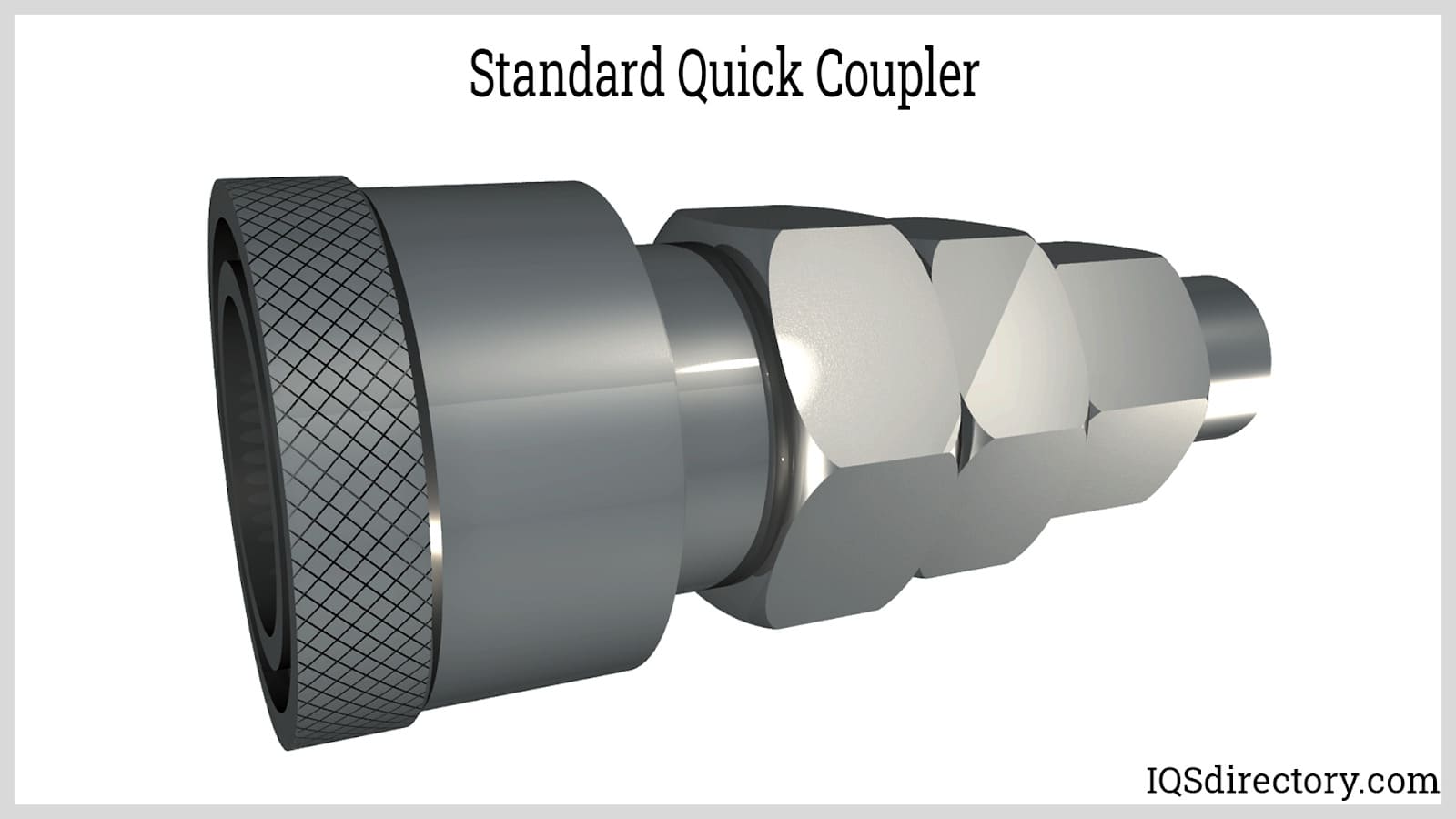
- Plain Connectors: Simple, cost-effective fittings using a ball-bearing sleeve lock for secure connections. Popular in basic air, water, or low-pressure systems.
- Sleeve and Poppet Couplings: Feature internal valves to prevent fluid loss and air ingress, making them ideal for hydraulic, chemical, and fuel transfer applications where system integrity is critical.
- Single-Poppet Connectors: Rely on a single seal to close off the liquid supply—suitable for non-hazardous applications where minor spillage is acceptable.
- Double-Poppet Couplings: Employ two seals to isolate fluids on both sides of the connection, minimizing trapped liquid and virtually eliminating drips—preferred in food, pharmaceutical, and chemical lines.
- Sliding Seal Couplers: Designed for hazardous chemical handling, featuring flush seals that reduce bacteria or dirt accumulation, supporting sanitary and safety-critical processes.
- Hydraulic Quick Disconnects: Engineered for high-pressure hydraulic systems in construction, manufacturing, and heavy equipment. These couplings maintain system pressure, prevent air ingress, and enable fast tool or hose changes.
- Air Quick Couplers: Used in pneumatic tool connections, air compressors, and inflation devices. While their seals aren’t as stringent as those for liquids, they are optimized for ease of use and frequent cycling.
- Breakaway Couplers: Essential in hazardous material transfer or fueling stations, these couplers automatically close when subjected to excessive force, preventing large-scale spills or accidents.
- Dry Disconnect Couplings: Featuring internal locks and matched valves, these couplings are designed for zero-drip performance in the transfer of hazardous chemicals or in sanitary lines—minimizing both environmental risk and product loss.
- Ball Couplers: Use a series of locking balls to secure the connection, often with a push-button mechanism for quick engagement or release. Common in laboratory, medical, and light-duty industrial applications.
- Camlock Couplings: Also known as cam and groove couplings, these are widely used in chemical, petroleum, and bulk transfer systems. The cam arms on the female coupler lock into the grooves of the male adaptor, creating a robust seal for high-volume or hazardous media transfer.
Advantages of Quick Disconnect Couplings
Quick disconnect couplings deliver a host of advantages that make them the preferred choice for fluid and gas connections in countless industries. Here are the key benefits:
- Speed and Efficiency: Rapid, tool-free connection and disconnection minimize downtime, speed up maintenance, and streamline equipment set-up or changeovers.
- Leak Prevention and Cleanliness: High-integrity seals and internal shut-off valves prevent leaks, drips, and contamination—crucial for safety, environmental protection, and product purity.
- Enhanced Safety: Fast disconnection allows for immediate isolation in case of emergency or during maintenance, reducing the risk of spills, fires, or exposure to hazardous fluids.
- Versatility: Available in a wide range of materials, sizes, and connection styles to suit everything from high-pressure hydraulics and fuel systems to low-pressure air lines and food-grade applications.
- Durability and Longevity: Precision-engineered couplings are built to withstand repeated cycles, exposure to harsh chemicals, extreme temperatures, and mechanical stresses—reducing replacement costs and downtime.
- User-Friendly Operation: Ergonomic designs support one-handed use, even when operators wear gloves or work in tight spaces.
- Cost Savings: By reducing maintenance time, fluid loss, and equipment wear, quick disconnects lower total ownership costs for industrial operations.
Looking to minimize leaks and improve system reliability? Discover how quick disconnect couplings can help you achieve your operational goals—read our case studies and customer testimonials for real-world examples.
Accessories for Quick Release Couplings
Optimizing the performance and extending the lifespan of your quick release couplings often involves selecting the right accessories. Key accessories include:
- Protective Dust Caps and Plugs: Prevent dust, debris, and contaminants from entering the coupling when disconnected, maintaining system cleanliness, and preventing premature wear—especially important in outdoor, construction, or food processing environments.
- Handles and Grip Enhancements: Improve ergonomics and make connections easier, particularly for operators with gloves or in challenging conditions.
- Breakaway Clamps: Add a layer of safety by preventing hoses or lines from detaching unexpectedly during high-stress operations.
- Protective Housings and Guards: Shield couplings from mechanical impact or chemical exposure, prolonging service life in harsh environments.
- Color Coding and Tagging: Simplifies identification of lines for maintenance or changeovers, reducing errors and speeding up workflow.
When should I use dust caps or breakaway clamps with my quick disconnects? Assess your operating environment, contamination risks, and safety requirements—our Accessory Selection Guide helps you choose the right options for your application.
Proper Care and Standards for Quick Disconnect Couplings
Ensuring the long-term performance and safety of your quick disconnect couplings involves proper maintenance, adherence to standards, and operator training. Here are best practices:
- Protect Couplings from Contamination: Always use plugs, caps, or covers when couplings are not engaged to prevent ingress of dirt or debris.
- Operate Within Pressure Ratings: Exceeding the specified pressure range can lead to coupling failure, leaks, or catastrophic system damage. Always verify product ratings before use.
- Compatibility with Media: Select materials and seals that resist corrosion and degradation from the chemicals or fluids being transferred.
- Regular Inspection and Cleaning: Periodically check couplings for wear, damage, or contamination. Clean internal and external surfaces as needed to maintain performance.
- Training and Safety Procedures: Ensure operators are familiar with the manufacturer’s instructions and safety guidelines. Provide training on correct connection, disconnection, and emergency response procedures.
- Compliance with Standards: Most quick disconnect couplings must meet industry and international standards—such as ISO 7241 series A/B for hydraulic quick disconnects, ISO 16028 for flat face couplings, and various ASTM, SAE, or FDA standards depending on application. Always verify compliance for your region and industry.
Purchasing Quick Disconnect Couplings
Selecting the right quick disconnect couplings and fittings for your operation requires careful consideration of your application’s specific needs. Here’s a step-by-step approach to guide your purchasing decision:
- Define Requirements: List all operating parameters—fluid or gas type, pressure and temperature range, required flow rate, frequency of connection, and any regulatory or safety standards.
- Set Budget and Timeline: Determine your cost limits and required delivery timeframe.
- Compare Manufacturers: Explore the manufacturers listed on this page. Evaluate their product ranges, quality certifications, customer reviews, and experience in your industry.
- Request Quotes and Technical Support: Contact three or four suppliers with your specifications. Ask for technical advice, product recommendations, and detailed quotations.
- Evaluate Offers: Review technical proposals, warranty terms, support options, and pricing. Consider not just upfront costs, but also total cost of ownership, maintenance support, and availability of replacement parts.
- Select the Best Fit: Choose the manufacturer and product that best aligns with your operational goals, safety requirements, and budget.
Are you ready to request a quote or need help specifying your quick disconnect system? Contact our expert team or use our interactive product configurator to get started.
Whether you’re sourcing hydraulic quick disconnects, pneumatic fittings, sanitary couplings, or specialized connectors for hazardous media, our network of experienced manufacturers is ready to assist. All listed suppliers are vetted for quality, reliability, and industry expertise.
What are quick disconnect couplings used for?
Quick disconnect couplings are used for fast and secure connection and disconnection of fluid and gas transfer lines in industries such as agriculture, automotive, chemical processing, food & beverage, construction, firefighting, aerospace, medical, manufacturing, and oil & gas. They help minimize leaks, reduce contamination, and improve operational efficiency.
How do quick disconnect couplings prevent leaks and contamination?
Quick disconnect couplings often feature integrated shut-off valves or dry disconnect technology, which automatically seal off both sides of the connection when disengaged. This design prevents leaks, drips, and contamination during both connection and disconnection.
What materials are commonly used in quick disconnect couplings?
Common materials for quick disconnect couplings include stainless steel, carbon steel, brass, nickel-plated brass, copper, bronze, aluminum, and plastics such as polypropylene, nylon, and PVDF. Material selection depends on factors like chemical compatibility, pressure, temperature, and application requirements.
What types of quick disconnect couplings are available?
Types include plain connectors, sleeve and poppet couplings, single- and double-poppet connectors, sliding seal couplers, hydraulic quick disconnects, air quick couplers, breakaway couplers, dry disconnect couplings, ball couplers, and camlock couplings. Each type is optimized for specific applications, pressures, and media.
How do I choose the right quick disconnect coupling for my application?
To select the right coupling, define your fluid or gas type, pressure and temperature range, flow requirements, frequency of use, regulatory standards, and any specific safety needs. Compare manufacturers, request technical advice, and evaluate offers based on both performance and long-term ownership costs.
What accessories can improve the performance of quick disconnect couplings?
Accessories such as protective dust caps and plugs, handles, breakaway clamps, housing guards, and color coding systems can enhance performance, protect against contamination and impact, and improve ergonomics and safety during use.
What standards should quick disconnect couplings comply with?
Quick disconnect couplings should comply with relevant industry and international standards such as ISO 7241 series A/B for hydraulic couplings, ISO 16028 for flat face couplings, and various ASTM, SAE, or FDA regulations depending on application and geographic region.
How should I maintain my quick disconnect couplings?
Maintain couplings by using protective covers, operating within specified pressure ratings, cleaning internal and external surfaces regularly, inspecting for damage or wear, and ensuring operators are trained in proper use and safety procedures.